How to Build a Consistent B2B Pipeline Without a Sales Team
You don't need an SDR team to keep deals flowing. You need a system that runs in the background — 30 minutes a day, not a panic-filled Monday morning.
The burst-and-stop cycle
Here's how most small teams prospect: pipeline gets thin, panic sets in, a burst of LinkedIn outreach happens, 50 connection requests go out, a few conversations start, pipeline fills slightly, and prospecting stops. Two months later: repeat. This is the burst-and-stop cycle, and it's why most small businesses never build a predictable revenue engine.
Burst-and-stop prospecting is like only eating when you're starving. You survive, but you never thrive. Consistent prospecting is like eating well every day — you never get to the point of desperation.
Why bursts fail (even when they feel productive)
A Monday morning where you send 50 outreach messages feels productive. You did more prospecting in 3 hours than the last 3 weeks combined. But burst prospecting has three fatal flaws:
Reply windows don't batch
50 messages sent on Monday means 50 replies scattered across the week. You can't respond to all of them promptly because you're back in product/ops mode by Tuesday. Slow replies kill momentum.
Follow-ups get forgotten
When you prospect in bursts, follow-ups become a separate task you never schedule. The 35 people who didn't reply to your Monday blast? You'll get to them \"next week\" — which never comes.
Domain reputation punishes spikes
Email providers flag sudden volume spikes. 50 emails on Monday and zero Tuesday through Friday looks like a spam campaign, even if every email is legitimate.
The minimum viable pipeline system
A consistent pipeline doesn't require more total time than burst prospecting. It requires distributing the same time differently. Here's the minimum viable system:
| When | Activity | Time |
|---|---|---|
| Daily (Mon-Thu) | 30 min: review replies, send follow-ups, personalise new batch | 30 min |
| Monday | Run new search, review AI-filtered results, select top 10-15 | Included in daily 30 |
| Friday | Pipeline review: what moved, what stalled, plan next week's targets | 20 min |
Total: ~2.5 hours/week. Same as one Monday-morning burst. The difference: replies get handled within hours, follow-ups happen on schedule, and domain reputation stays healthy.
Automate the research, not the relationship
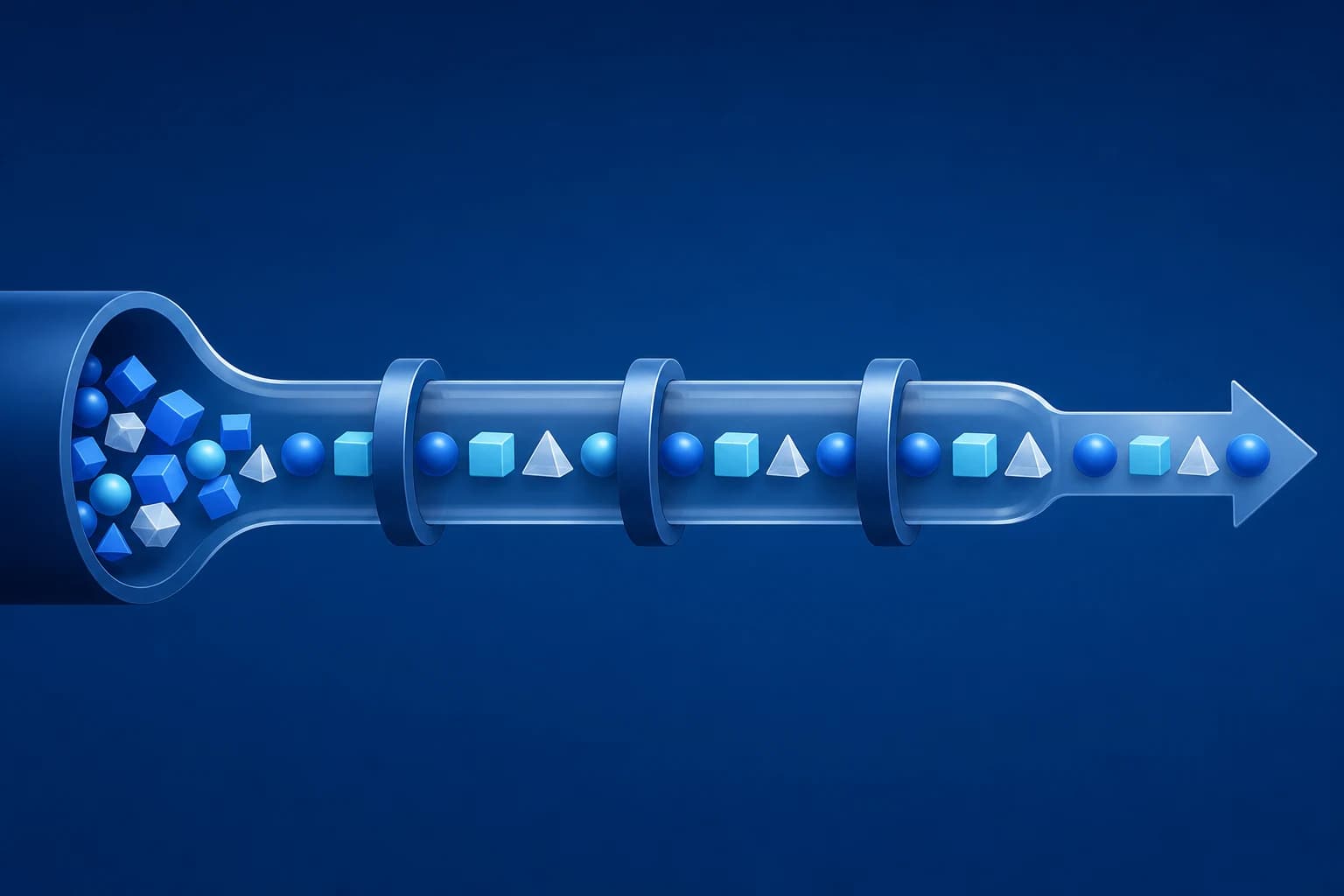
The manual parts of prospecting — searching LinkedIn, reading profiles, deciding who's relevant, finding contact details — should be automated. The human parts — personalizing messages, having conversations, building relationships — shouldn't be.
The Automation Line
Batch the personalization
Personalization at scale sounds like an oxymoron. It's not. It's about having a system that surfaces the right information so you can write a 2-sentence personal touch in 60 seconds.
Start with enriched data
Don't research from scratch. Your tool should surface company industry, recent activity, and decision-maker details before you write a word.
Use a 2-sentence personalization formula
Sentence 1: reference something specific about them. Sentence 2: connect it to why you're reaching out. That's it. Two sentences.
Batch similar prospects together
Personalize 10 emails to logistics companies in one sitting, then 10 to fintech. Your brain stays in the same context, speed improves.
The weekly cadence that compounds
Consistency isn't about doing a lot. It's about doing a little, every day, without fail. Here's what a compound-growth prospecting week looks like:
Run search for new prospects. AI filters and scores. Select top 15.
Personalize first-touch emails for Monday's 15. Send batch 1.
Review replies from last week's campaigns. Respond within 2 hours. Send LinkedIn connects to non-responders.
Follow-up emails to Tuesday's batch (non-responders). 20-30 words each.
Pipeline review. What converted? What didn't? Refine ICP if needed. Plan next week's search criteria.
What consistency looks like after 90 days
One week of consistent prospecting: 15 new conversations started. One month: 60 conversations, 8-12 progressing. Three months: 180+ conversations started, pipeline of 20-30 active opportunities, and you haven't had a single Monday-morning panic.
A pipeline system that runs itself.
AI handles the search, filtering, and enrichment. You handle 30 minutes of personalization a day. No credit card required.